
Fence Wire
Shop our complete range of fence wire — including barbed wire, plain high-tensile wire, tie wire, white sighter wire, and PVC coated wire. Everything you need for rural boundary fencing, livestock containment, and agricultural wire fencing applications. Australia-wide delivery to the Sunshine Coast, Brisbane, and South East Queensland.
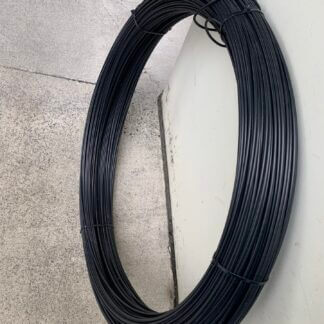
Fence Wire — Complete Buying Guide
Wire fencing is one of the most fundamental and cost-effective boundary and containment solutions for rural and agricultural properties across Australia. Whether you’re running a multi-strand barbed wire fence for cattle, a plain wire fence for horses, or stringing sighter wire for visibility in a deer or horse paddock, choosing the right wire type and specification makes a significant difference to the performance and longevity of your fence.
Types of Fence Wire
Barbed Wire
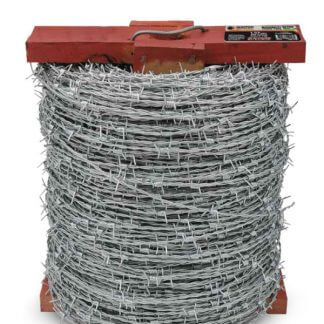
Barbed wire is one of Australia’s most widely used rural fencing products, providing an effective physical and psychological deterrent for cattle and other large livestock. Constructed from two twisted high-tensile steel wires with sharp barbs crimped at regular intervals, barbed wire is run as the top strand (or multiple strands) of a multi-strand fence to add height and deterrence above a mesh base, or used alone in a 5–8 strand configuration for cattle and stock fencing.
- 2-point barbed wire: Barbs with two points — slightly less aggressive than 4-point, commonly used in standard rural fencing
- 4-point barbed wire: Barbs with four points — provides a stronger deterrent, widely used for cattle and large livestock fencing across Queensland
- High-tensile barbed wire: Manufactured from high-tensile steel for greater strength and less sagging over long spans — the preferred choice for professional rural fencing installations
Important: Barbed wire should never be used for horse fencing — it causes serious lacerations when horses run into or become entangled in it. Use plain wire or electric wire for horse paddock fencing.
Plain High-Tensile Wire
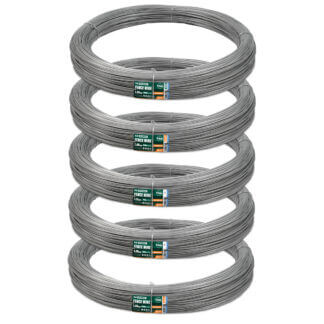
Plain wire (smooth high-tensile wire) is one of the most economical and versatile wire fencing options available. Used in multi-strand configurations (typically 5–8 strands depending on stock type), plain wire fences are widely used for cattle, horse, and general livestock fencing across South East Queensland and rural Australia. The high-tensile steel provides excellent strength and stretch resistance, allowing longer spans between posts compared to lower-tensile alternatives.
- Horse fencing: Plain wire is the preferred wire type for horse paddocks — no sharp projections that cause injury
- Cattle and sheep: Multi-strand plain wire fences provide effective containment at a lower cost per metre than mesh
- Long fence runs: High-tensile plain wire can span further between posts than softer wire, reducing post requirements on long straight runs
Tie Wire
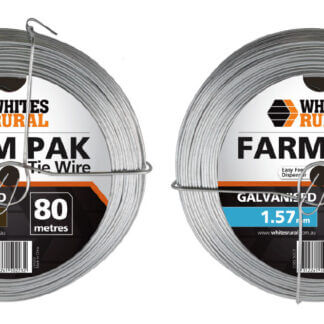
Tie wire (also called lacing wire or binding wire) is a soft, annealed galvanised wire used to attach mesh to posts, rails, and line wires, and to join sections of mesh or wire together. Unlike high-tensile structural wire, tie wire is designed to be soft and malleable — easy to twist and bend by hand or with pliers to create secure fastenings. An essential consumable for any fencing or mesh installation project.
White Sighter Wire
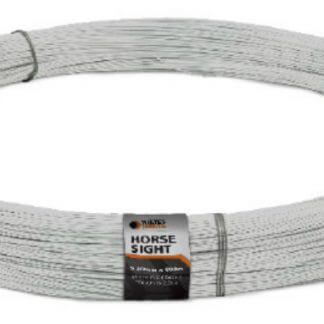
White sighter wire (also known as visibility wire or white electric tape in some systems) is a high-visibility white wire used as a top or additional strand in horse paddock fencing. The bright white colour makes the fence clearly visible to horses at speed — a critical safety feature that reduces the risk of horses running through or jumping into a fence they cannot see in low-light conditions. Sighter wire is particularly important for newly installed fences that horses haven’t yet learned the position of.
- Use as the top strand of any horse paddock fence for maximum visibility
- Particularly important in shaded areas, early morning, and dusk conditions
- Can be used in combination with plain wire lower strands for a safe, functional horse fence
PVC Coated Wire
PVC coated wire features a galvanised steel core with a coloured PVC polymer coating — most commonly available in green or black. The PVC coating provides additional corrosion protection beyond standard galvanising, and gives the wire a neater, more discreet appearance in garden and urban settings. Widely used in garden trellises, estate fencing, aviary construction, and any application where a more refined appearance is desired alongside functional wire fencing.
Choosing the Right Wire for Your Fence
- Cattle fencing: 4-point barbed wire (top strands) with plain wire or mesh below — 5 to 8 strands total depending on terrain and stock pressure
- Horse fencing: Plain wire or white sighter wire — never use barbed wire near horses
- Sheep fencing: Plain wire strands above rural mesh, or multi-strand plain wire for large paddocks
- Goat fencing: Tighter mesh with plain wire strands — goats are persistent fence testers and require stronger containment
- Garden and trellis: PVC coated wire for aesthetics, or galvanised plain wire for strength and durability
- General fastening: Soft tie wire for attaching mesh and components to posts and rails
Wire Gauge and Tensile Strength
Wire gauge refers to the wire’s diameter — commonly expressed in millimetres (e.g. 2.5mm) or as a gauge number. Higher tensile strength means the wire resists stretching and breaking under load, allowing longer spans and better performance in high-pressure livestock situations. For permanent rural fencing, always choose high-tensile wire — it costs slightly more but significantly outperforms standard tensile wire over the life of the fence.
Frequently Asked Questions
How many strands of wire do I need for a cattle fence?
A standard cattle fence on flat terrain typically uses 5 strands — 3 plain wire strands and 2 barbed wire strands at the top. On steep terrain or with high cattle pressure, increase to 6–8 strands. Always use a quality strainer assembly at corners and gates to maintain wire tension across all strands.
Can I use barbed wire for sheep fencing?
Barbed wire can be used as the top strand of a sheep fence as a deterrent against sheep climbing or pushing over the fence. However, barbed wire should not make up the majority of a sheep fence, as sheep wool can become entangled in barbs. The lower strands should be plain wire or mesh.
What is the difference between high-tensile and standard tensile wire?
High-tensile wire is manufactured from steel with a higher carbon content, giving it significantly greater strength and elasticity for its diameter compared to standard (soft) wire. High-tensile wire can span longer distances between posts, resists stretching under animal pressure, and has a longer service life — it is the industry standard for professional rural fencing in Australia.
Do you deliver fence wire to Brisbane and the Sunshine Coast?
Yes — we offer Australia-wide delivery including to Brisbane, the Sunshine Coast, Gold Coast, and all of South East Queensland. Wire rolls are delivered by pallet freight for larger orders; contact us for a freight quote on bulk wire purchases.
Order Fence Wire Online — Sunshine Coast, Brisbane & Australia-Wide
Discount Landscape Supplies stocks a comprehensive range of fence wire for rural, agricultural, and garden applications. Browse our complete range of barbed wire, plain wire, tie wire, sighter wire, and PVC coated wire below, and order online with fast dispatch. Contact our team for expert advice on wire selection, bulk pricing, and freight quotes for large rural fencing orders.