
Mesh Fencing
Shop our complete range of mesh fencing — including welded mesh panels, hexagonal wire netting, stiff stay rural mesh, hinge joint fencing, and weld mesh sheets. Whether you need a solution for livestock containment, garden protection, or industrial applications, our mesh fencing range has you covered. Australia-wide delivery to the Sunshine Coast, Brisbane, and South East Queensland.
Mesh Fencing — Complete Buying Guide
Mesh fencing is one of the most versatile fencing categories available — spanning everything from fine hexagonal wire netting for bird exclusion to heavy-duty welded mesh panels for industrial security applications. Understanding the key differences between mesh types, wire gauge, and opening size will help you select the right product for your specific fencing need.
Types of Mesh Fencing
Welded Mesh Panels & Sheets
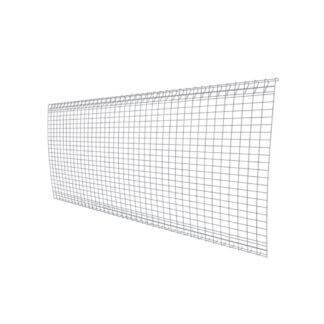
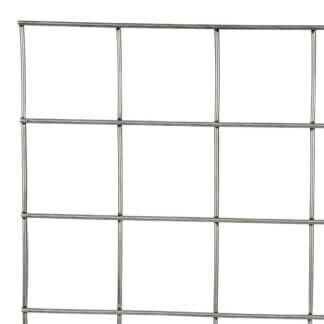
Welded mesh is manufactured by electrically welding individual wire strands at each intersection, creating a rigid, strong grid. The rigidity of welded mesh makes it ideal for applications requiring a firm, upright structure — animal enclosures, industrial cages, security panels, vegetable garden enclosures, and concrete formwork reinforcement. Our Acacia weld mesh panels and welded mesh sheets offer a premium, durable welded mesh option available in standard sizes for a wide range of uses.
- Acacia Weld Mesh Panels: Premium welded mesh panels in standard sizes — suitable for animal enclosures, aviaries, security applications, and custom fencing projects
- Welded Mesh Sheets: Individual flat welded mesh sheets — ideal for construction reinforcement, custom cage building, and garden protection
Hexagonal Wire Netting
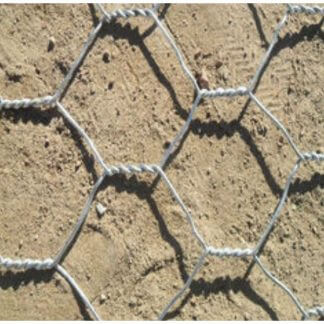
Hexagonal wire netting (commonly called chicken wire or aviary wire) is a lightweight, flexible woven wire product with a distinctive hexagonal mesh pattern. It is one of the most widely used wire products in Australia — used for chicken coops, aviaries, rabbit hutches, snake exclusion, garden protection, and a vast range of DIY projects. Available in a range of mesh sizes (from 13mm for snake exclusion through to 50mm for general poultry fencing) and wire gauges to suit different applications.
Stiff Stay Mesh
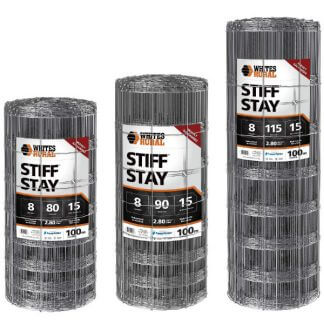
Stiff stay mesh (also known as fixed-knot mesh) is a heavy-duty rural mesh designed for high-pressure livestock fencing applications. The fixed knot at each intersection creates a rigid, strong structure that resists deformation under sustained animal pressure — making it ideal for cattle, horses, goats, and predator exclusion. The vertical stays are rigid, unlike the flexible ring-lock or hinge-joint designs, giving stiff stay mesh its name. Available in a range of heights and strand counts for different livestock types.
Hinge Joint Mesh
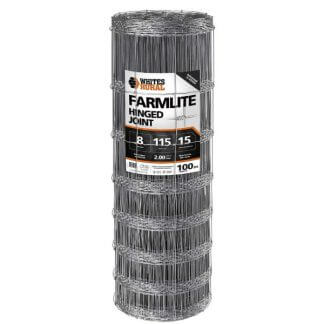
Hinge joint mesh (also known as ring-lock in some configurations) is a flexible rural mesh where wires are connected by a spiral or crimped hinge joint at each intersection. This flexibility allows the mesh to follow undulating terrain without losing tension or structural integrity — a major advantage for fencing on the hilly Sunshine Coast hinterland and rural South East Queensland. Hinge joint mesh is widely used for sheep, cattle, goat, and general livestock fencing.
Choosing the Right Mesh for Your Application
- Livestock containment (cattle, sheep, goats): Stiff stay or hinge joint rural mesh — choose height and strand count based on stock type
- Predator exclusion (dogs, foxes, feral pigs): Heavy gauge fixed-knot or stiff stay mesh with tight base openings and underground skirt
- Poultry and small animals: Hexagonal wire netting (chicken wire) in 25mm–50mm opening size
- Aviaries and bird enclosures: Fine hexagonal netting (13mm–25mm) or welded mesh in small gauge
- Snake exclusion: Very fine hexagonal netting in 8mm–13mm opening size
- Industrial / security: Heavy gauge welded mesh panels in 50mm x 50mm or smaller openings
- Garden protection: Hexagonal netting or welded mesh around vegetable gardens to exclude rabbits, bandicoots, and rodents
Key Mesh Specifications Explained
- Opening size: The dimensions of the mesh opening (e.g. 50mm x 50mm, 25mm x 25mm). Smaller openings provide better containment and exclusion of small animals but reduce airflow and visibility
- Wire gauge: The diameter of the wire — heavier gauge (lower number in older systems, higher in mm) means stronger, more durable mesh. Choose heavier gauge for high-pressure livestock or security applications
- Height: Match fence height to the animals being contained or excluded — see individual product descriptions for guidance
- Surface treatment: Galvanised (zinc-coated) mesh provides corrosion resistance for outdoor use. PVC-coated mesh adds an additional layer of protection and can improve aesthetics in urban settings
Installation Tips for Mesh Fencing
Regardless of the mesh type, correct installation technique is critical for a durable, effective fence. Always start with robust strainer post assemblies at corners, gates, and ends — these anchor the tension of the entire fence run. Use appropriate staples, clips, or tie wire to attach mesh to posts at regular intervals — avoid relying on just the top and bottom. Strain mesh to the correct tension before securing — under-tensioned mesh will sag and be easily pushed by animals. Ensure the base of the mesh makes full contact with the ground to prevent animals pushing underneath.
Frequently Asked Questions
What is the difference between welded mesh and woven mesh?
Welded mesh has wires fused together at each intersection by electrical welding — creating a rigid, strong grid. Woven mesh (like hexagonal netting or hinge joint mesh) has wires mechanically interlocked or twisted at intersections — providing more flexibility. Welded mesh is better for rigid panels and structural applications; woven mesh is better for following terrain and absorbing impact.
What mesh size do I need for sheep fencing?
For sheep fencing, ring-lock or hinge joint mesh with graduated spacing (tighter at the base to prevent lambs passing through) is the standard choice. Height of 900mm is typical for adult sheep fencing — choose 730mm for shorter races or yards where lambs won’t be present. Pair with star picket line posts and timber strainers at corners.
Can I use hexagonal wire netting for a chicken coop?
Hexagonal wire netting (chicken wire) is suitable for enclosing a chicken run against birds and small animals, but it is NOT predator-proof against dogs, foxes, or larger animals that can tear or push through it. For a predator-resistant chicken coop, use heavy gauge welded mesh (1.2mm minimum, 25mm x 25mm or 50mm x 50mm) for the walls and roof.
Do you deliver mesh fencing to Brisbane and the Sunshine Coast?
Yes — we offer Australia-wide delivery including to Brisbane, the Sunshine Coast, Gold Coast, and all of South East Queensland. Mesh rolls and panels are typically delivered by pallet freight for larger orders; contact us for a freight quote.
Order Mesh Fencing Online — Sunshine Coast, Brisbane & Australia-Wide
Discount Landscape Supplies stocks a comprehensive range of mesh fencing products for every application — from fine aviary wire to heavy-duty rural mesh. Browse our full range of sub-categories below and order online with fast dispatch to Brisbane, the Sunshine Coast, and all of Australia. Contact our team for expert advice, bulk pricing, and freight quotes on large mesh fencing orders.