
Barbed Wire
Shop our range of barbed wire — galvanised two-strand and four-point barbed wire for rural property boundary fencing, stock deterrent applications and security perimeter fencing across Australian farms, pastoral properties and commercial sites.
-

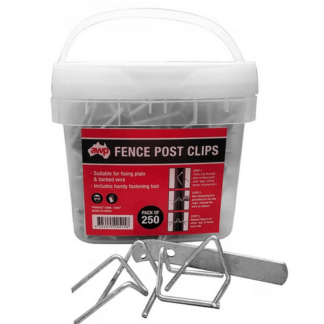
AWP Fence Post Clips Tub 250
Sale! Original price was: $30.00.$25.00Current price is: $25.00.Add to cart -
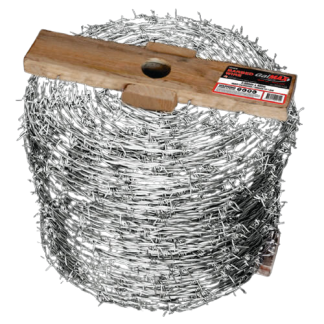
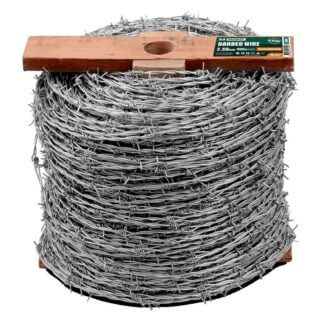
GALMAX BARBED WIRE IOWA 2.50mm X 400m HEAVY GAL Aus Made
Sale! Original price was: $197.99.$175.00Current price is: $175.00.Add to cart -
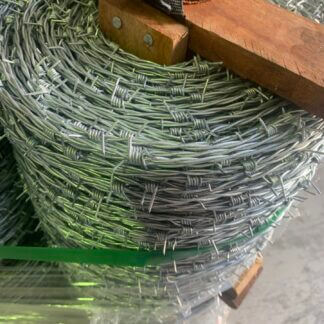
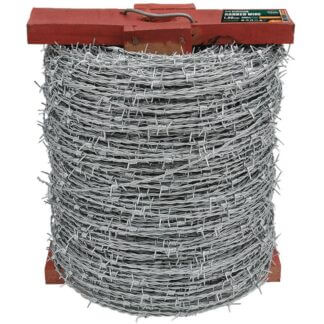
1.8mm High Tensile Barbed Wire 500m Roll – Heavy Galvanised
Sale! Original price was: $150.00.$125.00Current price is: $125.00.Add to cart -
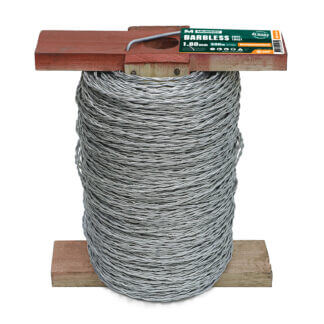
Murray Safe Twist Barbless Wire Roll 1.80mm X 500m (High Tensile, Heavy Gal)
Sale! Original price was: $169.99.$155.00Current price is: $155.00.Add to cart -
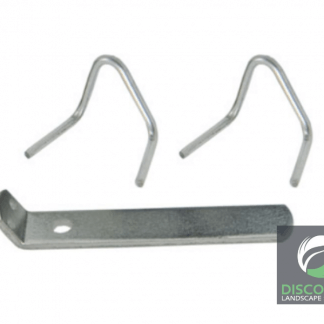
Whites Rural Fencing Clips for Steel Posts – Box 250 Inc Tool
$30.00Add to cart -
Barbed Wire Roll for Razor Wire Fence Applications – 1.8mm x 500m High Tensile Heavy Galvanised
Sale! Original price was: $164.99.$150.00Current price is: $150.00.Add to cart -
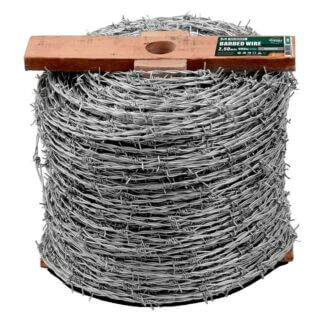
Murray Barbed Wire Roll – 2.5mm x 400m IOWA Heavy Galvanised
Sale! Original price was: $197.99.$185.00Current price is: $185.00.Add to cart -
Murray Barbed Wire Roll – 2.5mm x 400m IOWA Standard Galvanised
Sale! Original price was: $188.99.$175.00Current price is: $175.00.Add to cart
Barbed Wire — Buying Guide
What Is Barbed Wire Used For?
Barbed wire is a steel fencing wire with sharp barbs spaced at regular intervals along the wire. It is one of the most widely used boundary fencing wires in rural Australia, primarily used as a top-wire deterrent on stock and cattle fences, as a security deterrent on commercial and industrial perimeter fencing, and as a boundary marker wire in remote pastoral areas. It is not appropriate for use with horses or in residential areas where people or pets may come in contact with the fence.
Types of Barbed Wire
- 2-strand galvanised barbed wire — the most common type; two strands of wire twisted together with four-point barbs; suitable for most cattle and general rural applications
- High-tensile barbed wire — made from stronger, thinner high-tensile wire; allows longer spans between posts with less sag; preferred for large-scale rural fencing
- 4-strand barbed wire — heavier construction with barbs on all four strands; provides greater deterrence in high-security applications
Barbed Wire in Stock Fencing
In traditional Australian rural fencing, barbed wire is typically used as the top one or two wires on a plain wire or hinge joint mesh fence, acting as a deterrent to stop cattle from leaning over the fence top. A standard cattle fence may consist of three to four plain wires with a top barbed wire strand. Barbed wire should never be used as the sole fencing component where horses or vulnerable livestock have direct access to the fence.
Safety Precautions
Always wear heavy leather gloves when handling barbed wire — barbs are sharp and can cause serious cuts. Unroll barbed wire carefully using a fencing reel or spinner to prevent the roll from tangling or recoiling dangerously. Keep tensioned barbed wire lines clearly marked during construction to prevent accidental contact by workers or members of the public on adjacent land.
Frequently Asked Questions
Is barbed wire suitable for horse fencing?
No — barbed wire is not suitable for horse fencing. Horses can be severely injured if they come in contact with barbed wire. Use equine mesh, smooth wire or electric fencing for horse paddocks.
What is high-tensile barbed wire?
High-tensile barbed wire uses stronger steel wire that can be tensioned tighter with less sag between posts. It is preferred for large-scale rural fencing where reducing the number of posts and posts per kilometre is important.
How many barbs per metre are standard?
Four-point barbs are standard in Australian barbed wire, typically at 75mm–150mm intervals depending on the product.
Order Barbed Wire Online — Australia-Wide Delivery
Order online for fast dispatch. We supply rural property owners, farmers and fencing contractors across Australia. Contact us for bulk pricing on large roll quantities.